Essay
In praise of small bets
Why I'd rather ship five small things than plan one big one — and the kinds of problems where that breaks down.

A pattern I keep coming back to: when the path is unclear, make the bet small enough to actually take.
The cost of certainty
Big decisions feel safer when you front-load the thinking. Write the doc, run the review, get the sign-off. But the thinking is only as good as your model of the problem — and most of the time, you don't have one yet.
You build the model by shipping.
What "small" means
A small bet is one where, if you're wrong, you find out in a week instead of a quarter. The shape of it usually looks like:
- One change at a time. If two things move, you can't tell which one moved the needle.
- Reversible. You can undo it without an apology email.
- Cheap to instrument. You'll know within days if it worked.
When it breaks down
This whole approach falls apart for problems where the answer is only visible at scale — pricing, brand, hiring. There you have to commit, watch carefully, and accept a slow signal.
Most of the time, though, you're not in that situation. You just feel like you are because the meeting is on Thursday.
Keep exploring
All posts →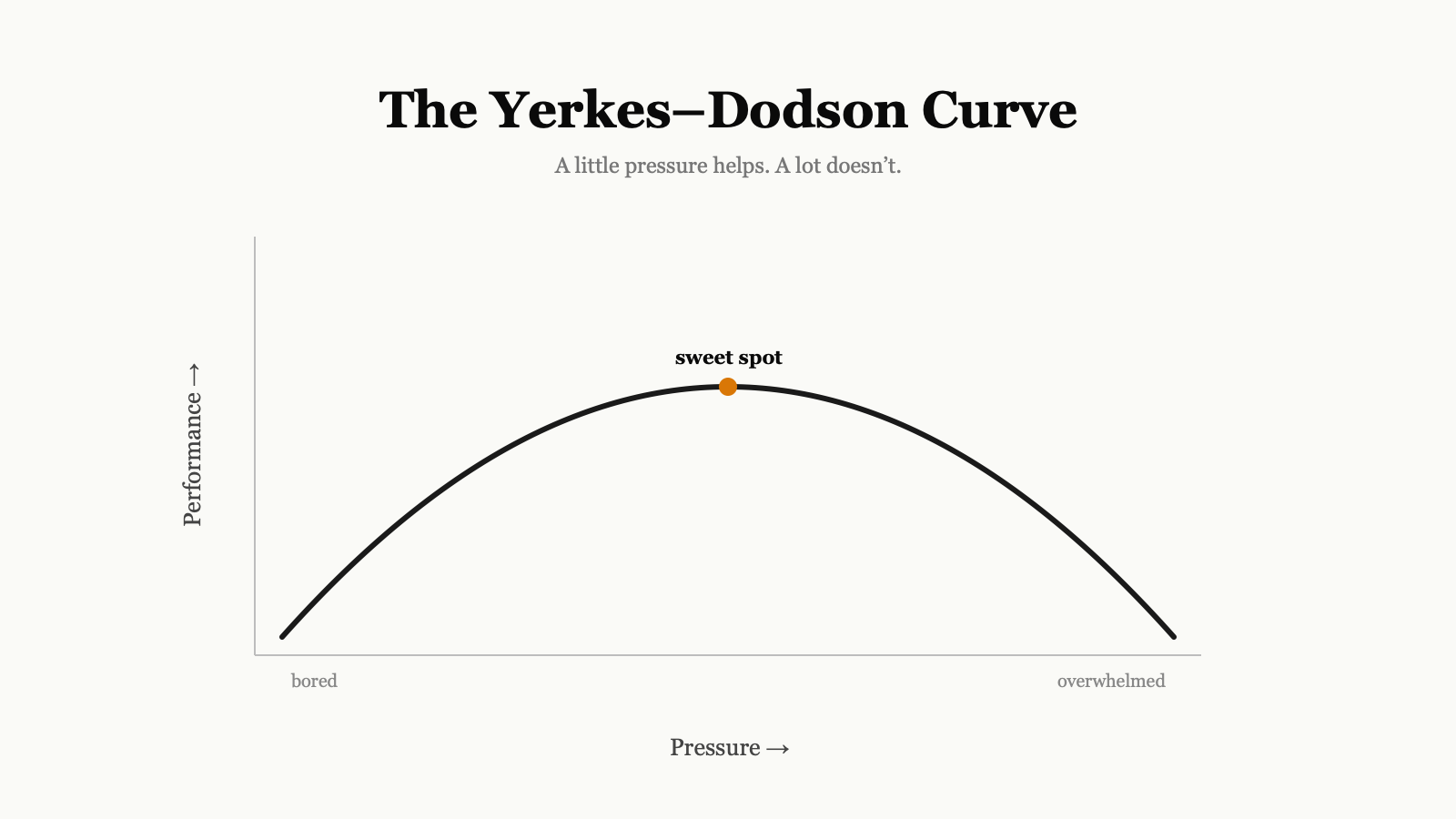
A little pressure helps. A lot doesn't.
A plain-English walkthrough of the Yerkes-Dodson Law — the 1908 mouse experiment that explains why deadlines work, why interviews choke you, and what to do about it.
3 min read
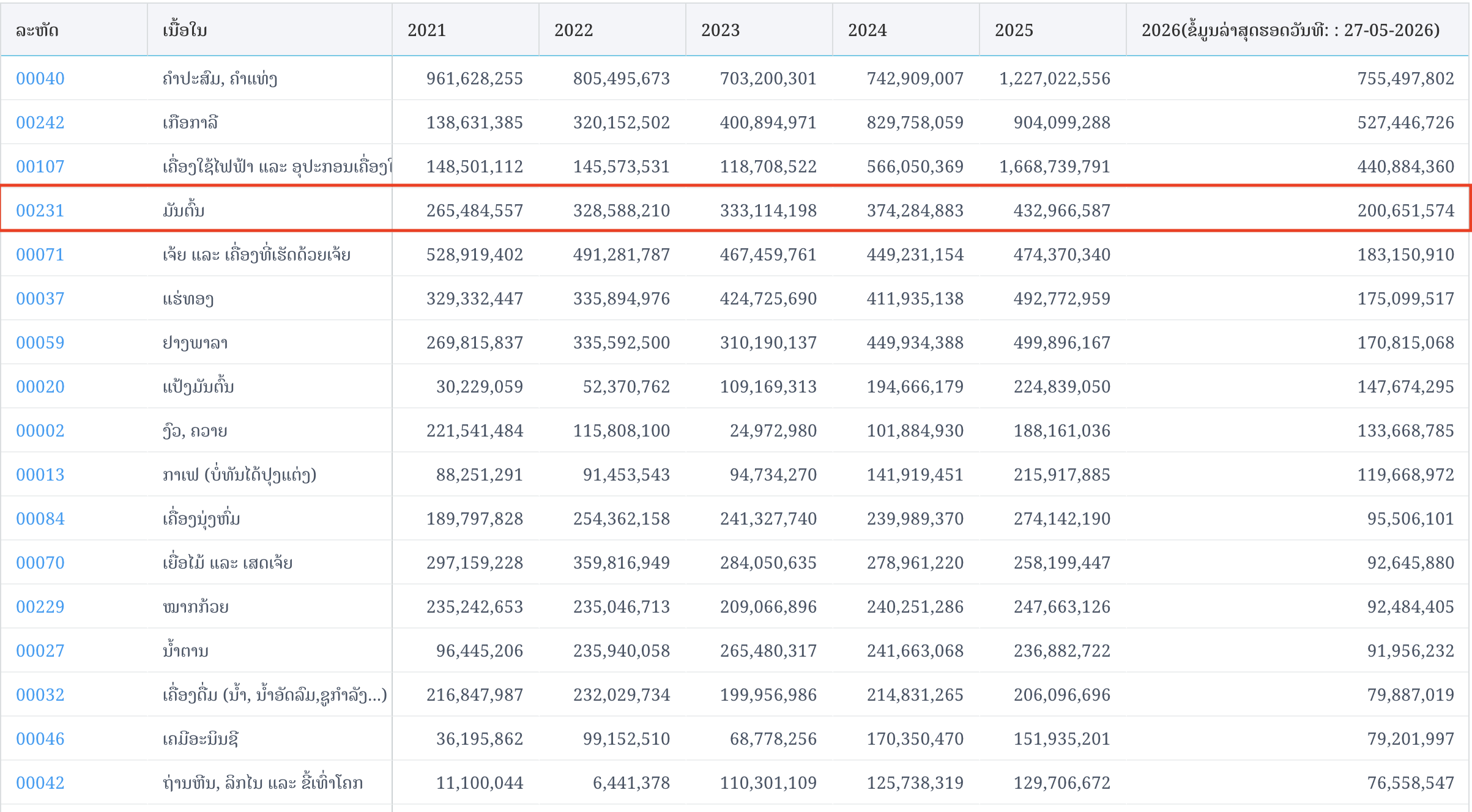
Laos exports $1.3 million of cassava every day
Lao cassava export values from 2021 to mid-2026, with a destination breakdown. In 2025 the total reached $432M, with 89% going to Thailand.
1 min read

Writing is debugging your thoughts
The act of putting a half-formed idea into a sentence is the most reliable way I know to find out whether it actually holds up.
1 min read